
What Makes us Safe

Prov 29:25 (ESV)  The fear of man lays a snare, but whoever trusts in the LORD is safe.

I haven’t done any trapping but Harry has tried to learn me up a bit on the subject.  It was an interesting lesson.   For years he has trapped for fox and coyote.  He would use either a snare or a steel spring trap.    Working with a basic understanding of the principle, I assumed that there wasn’t too much to the process.   Stake trap, bait trap, set trap, catch coyote.   It sounds like such a simple thing.   

Quite the contrary, there is much more to be considered.  First, we have to understand the natural abilities of the animal.  They have a heightened sense of smell and a keen wariness to anything out of the ordinary.  That naturally works in their favor and not ours.   So, how do we overcome their gifted sense of smell?  We must take every precaution of avoid getting our scent or ‘unnatural’ scent from tainting the trap or the site.  It begins with boiling the trap in lye.  A new, shiny store-bought trap is unfit for use because it smells of metal and oil and every other scent picked up during the production process.  After it is boiled, we then wax the trap.  We take the trap and dip it in a hot water/wax solution to cover the scent of the metal itself.  Afterwards, the trap is taken outside to keep it free from absorbing any human smells.   

After the trap is prepared, we have to prepare the trap site.  The trap has a strong metal stake attached with a chain and it is driven into the ground.  Next, a hole is dug and the trap is laid in and then covered with a fine layer of dirt.  During all of this we must wear rubber gloves and boots to mask our scent on the trap site.   Now after all this preparation the bait is placed nearby in a location situated so the back leg of the animal will release the spring and trap them.

As you can tell it is a much more detailed process to try to overcome or may we say ‘outwit’ our prey.  The better the deception of the trap the greater likelihood of success.   

Let’s now consider the proverb in chapter 29 verse 25.   “The fear of man lays a snare…”  After having examined the working nature of a snare/trap, notice the phrase “the fear of man”.   We usually think of a trap being set by a person.  But in this proverb we don’t have a person, instead we have a description.  The writer describes a whole set of things that ‘lays a snare’, or becomes a trap for those who are susceptible to fear’s deception.   A key feature of the phrase ‘fear of man’ is the ambiguous nature of the fear.  Meaning, it is personal to each individual.  What you fear from other people might be very different from what I fear.  

One way to describe the phrase, the fear of man, is to relate it to our modern description of ‘peer pressure’.  Most of us understand the power our peers often exert over us in our desire to ‘fit in’.   It may be wearing specific clothes or a listening to a certain style of music.  If we don’t meet these social expectations, we are not part of the group and are excluded.  In fear we do the necessary things to be a part of the group and keep the status quo.

This isn’t the only way the phrase can be understood.  It may also include the fear of what people may do to you by physical, emotional or spiritual means.  That’s a pretty large swath and the proverb lumps all these into the same category.  

Now let’s notice how the trap works.  As we noticed before, the preparation of the trap is critical to its success.  In other words, the less it looks like a trap the greater the chance of it catching its prey.  A great looking trap looks like a free meal… with no strings attached.  Nothing seems off and it don’t give that, “Something doesn’t smell right” scent.   That is the intended goal of the trap setter.   It looks safe. 
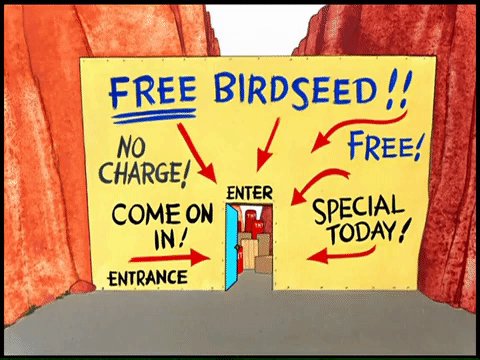
Notice the rest of the proverb, ‘but whoever trusts in the LORD is safe.’   The contrast is between what is safe and what appears safe.  All that appears safe isn’t.   Safety is the bait.  It is the lure, and has the irresistible aroma we seek out.   The power of the snare is how it bait’s us with a false sense of safety.  When we fear what people may say or do to us, we are tempted to take the false bait of accommodating or appeasing them.  The question we need to ask is, “What makes us safe?”  If we find safety in pleasing people, we will always be susceptible to the snare.

The key is uncovering the deception.  An uncovered snare should not trap us.   Our motivation to pleasing people makes us vulnerable.  We want to be safe from, with, among people.  Our fear of ridicule and rejection motivates us to take the bait of false safety.  We are deceived into believing that we are not caught in the snare.  We become trapped into a vicious cycle of seeking to please people.  It becomes a trap we can’t escape for we are deceived into believing we are free and safe, all the while we have to do more and more to fall for the deception.

The proverb asks to instead choose to trust in the Lord.  This alternative brings about real and lasting safety.   The psalmist wrote:

Psa 118:6-8  The LORD is on my side; I will not fear. What can man do to me?  (7)  The LORD is on my side as my helper; I shall look in triumph on those who hate me.  (8)  It is better to take refuge in the LORD than to trust in man.

 It is a difficult thing to stand up to those to whom we fear.  We are driven to seek acceptance and approval.  It may be a family member or a personal hero, perhaps our boss or even our enemy, but the effort is always the same.  We seek the approval of people whose opinion doesn’t make an eternal difference.

Before you leave this thought, ask yourself a few questions.

1.  Do you worry a lot about what people think or say about you?  

2.  Do you plan your day around making sure that you make someone happy?

3.  Are you willing to face ridicule for your faith in God?

4.  Whose opinion matters most in you day to day decisions?

If your answers to these questions reveal that you have a bit of a fear of man operating in your life… what steps do you need to take to put greater trust in the Lord?   Trust is developed in a relationship.  Your relationship with God should develop a growing trust based on your faith in how God proves Himself reliable in your daily experiences.  To overcome our fear of man we must grow a great trust in the Lord.   An awareness of the temptation to want to please others is a first step.   It’s easy to say I don’t fear but when your faith leads you to stand in opposition to the popular voices, we be begin to question our loyalties.   Be away of your vulnerabilities and the snare that is set, then take steps to avoid falling for a false sense of safety and grow in your trust in the Lord.


Poetic Justice

Pro 20:17  Bread gained by deceit is sweet to a man, but afterward his mouth will be full of gravel. 

Disney has made many movies that feature the villain getting what is coming to them.  I doubt we will see one of their movies where the villain wins in the end.  These movies strike at a deep-seated value of our culture, a sense of justice, that evil doesn’t win.   We especially like seeing the bad guy get what is coming to him in a most poetic way.    

Photo by icon0.com on Pexels.com

In Prov 20:17 Solomon paints a picture for us of an exchange that occurs between the miller and the baker.  It was common commerce among two businessmen in the village.  In the exchange of goods and services, fair trade is to be expected among professionals.   The miller brings the milled flour the baker orders and in exchange the miller received payment and barter in the form of bread. 

In this particular instance we find that the miller has decided that he will try to pull one over on the baker.  It is a slight deception on his part.  The issue seems to stem from quality control.  The milling process produces various grades of flour, from the very finest down to a very coarse.  These various grades are produced by altering the speed and pressure of the grinding wheels.  Naturally the very finest grade would need multiple grinds at slower speed and higher pressure.  The wear on the grinding wheels causes them to break down and bits of stone are added to the flour.  Or it could be from a bad batch of grain that wasn’t sifted properly and bits of stone are added to the flour.  Regardless, there is a quality control issue that occurred at the millers. 

Photo by Markus Spiske on Pexels.com

The miller is aware of the issue, but what can he do about it once it is discovered?  It is a slow, difficult process to remove all of the bits of stone from large quantities of flour.   So, he decides to deceive the baker and sell him the flour and let him deal with sifting the gravel out.  Thus, we see the force of the proverb.  The deception of the miller becomes painfully aware to the baker.  His workload has increased because he has to sift and verify the quality of each scoop of flour he places in the knead trough.   

When the miller receives some of the bread the baker owes him in payment, he makes an unpleasant discovery.  The bread certainly tasted good on the tongue.  But when chewing he discovers that his deception did not go unnoticed.  The baker included all of the stone bits from sifting the flour and included them into the miller’s ‘special’ bread.   He gets not only a few bits, but all the stones from the whole delivery, a mouth full of gravel. 

Do you think the miller got what was coming to him?  Most of us would relish watching the miller take that first bite.  Hopefully he didn’t lose any teeth in the process.  But if he did, who was to be blamed?  His deception was costly.  His reputation was placed in jeopardy and the quality of his work will be questioned for a long time to come.   He will be fortunate if it doesn’t put him out of business.  He was short sighted with the consequences of his deception.  We often are as well.  

We all like to see the bad guy get what’s coming to him except when we play the part of the bad guy.  Sure, my deception is not as bad as your deception.  We play that game with ourselves.  We tell ourselves that we didn’t have a choice or that there won’t be any consequences to face. Perhaps we even convince ourselves that we are the good guy in our scenario. It really doesn’t matter how we convince ourselves, the question we need to consider is how will we handle ourselves when our deception is found out. When justice is served upon us are we willing to eat our gravely bread? It’s poetic justice that is the hardest to stomach. How will you respond when you get what is coming to you?

Over/Under Estimation

Pro 26:27  Whoever digs a pit will fall into it, and a stone will come back on him who starts it rolling. 

When considering our ability to accomplish a task, we often estimate poorly. 

I’m a big fan of the DIY television shows.  I often scan through Netflix to see if there are any new ones that have come out. There is just something about the DIY spirit that is enjoyable to watch.  Quite understandably there is often a large gap between the watching and the doing.  For some reason, watching what others do gives me the impression that I am able to do the same, often with grievous miscalculated results.   I think Solomon observed the same in others.

 A slight miscalculation of ability.

Our proverb for consideration describes two instances of someone miscalculating their physical ability.  

Who would ever dig a pit, only to fall into it?  It doesn’t sound very smart.  Surely someone wouldn’t plan to fall into their own freshly dug pit.  It seems that something else is in play for us to understand the proverbs intention.  Over my lifetime I have been known to handle a shovel quite often.  Having dug a few ditches there are a few things you learn over time.  Here is what I learned.  There comes a point when digging that you can no longer stand outside the ditch and remove dirt.  That is the tipping point.  I think the picture Solomon is describing is a fellow who doesn’t want to get ‘dirty’ in the pit so he decides to stay on top and dig as deep as he can.  What he doesn’t count on is the tipping point where he overestimates his ability to balance himself or underestimates the depth of the pit.  Either way, he ends up falling in the pit.

The second picture Solomon describes is the man rolling a stone.  I find this picture humorous since I have found myself in similar situations.  It seems that we find the man taking on the task of moving a stone from one location to another.   We arrive on the scene when the man has made a startling discovery.  He may have overestimated his strength and thought he could move the stone by himself.  Or he may have underestimated the weight of the stone.  Perhaps he did not factor the terrain as he is moving the stone uphill.  All of these taken together have now placed the man in danger as the stone is about to roll back on him. 

Taken together this proverb warns to carefully consider our actions.  It is easy to over / under estimate the situation at hand.  We might say, “Look before you leap”.   We live during a time when people demonstrate their miscalculations in ‘fail’ videos.   Funny as they may seem, many of them end before we see the consequences of their actions.  We are spared the broken bones and bloody noses. 

As serious as this can be in a physical sense, it is much more serious in a spiritual sense.  We are prone to overestimate our spiritual resolve and underestimate the power of temptations in our lives. This leaves us vulnerable to dangers without and within.  Developing realistic expectations can be hard earned.  Falling into a pit is a memorable event and we soon decide not to take the trip again.  A stone rolling on us might be survivable but we would not want to risk taking the chance.  Spiritually speaking, do you take on unnecessary risk?   Do you play fast and loose with your soul?  We should take Solomon’s advice, assess the situation and make a fair estimation of our ability to handle the outcome.  Regardless of whether it is a physical or spiritual event, we should take care to avoid foreseeable dangers.  The wise person sees the danger and takes precaution.  Do you?

Words For Every Moment

Pro 12:19 Truthful lips endure forever, but a lying tongue is but for a moment. 

Our words follow us.

Once spoken, we must live with the consequences of our choice of words.    

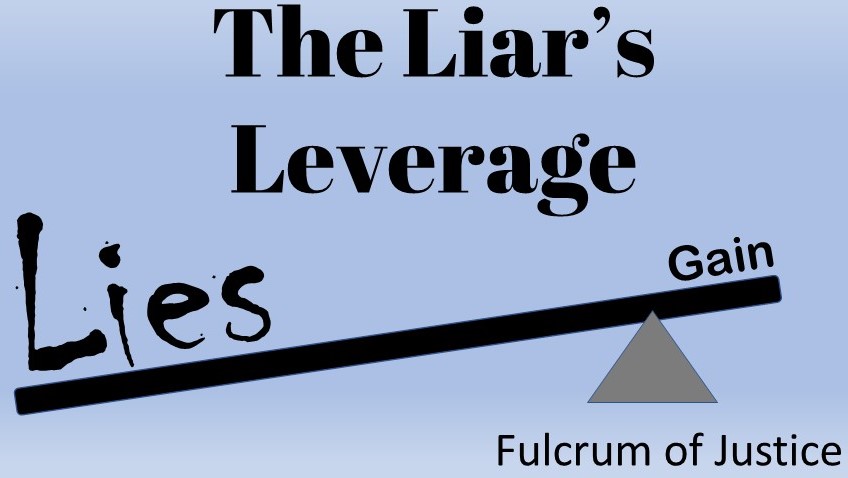
In my last post I mentioned the leverage or advantage that a liar is trying to gain over a person or situation.  This verse adds to our understanding of the liar’s situation by pointing out that the choice to lie is made for the moment.  The lies advantage is only a short time gain.  This is because of the inherent liability that dishonesty creates.  Lies require upkeep.   The liar must remember who heard the lie and when the lie was told.  He must remember the specific details of each and every lie.  But the exhaustion of the task is not over yet.  The liar must maintain the perception that they are honest.  For if their dishonesty is discovered they lose the advantage they so desperately desired.  And, not only do they lose the present advantage, they also lose any future advantage.  Honesty is a fragile trust.  It is broken by lies. 

Truthful   Lying
Lips  Tongue
Forever     A moment

This proverb contrasts three sets,       

Let’s consider a few observations from the contrasts.   Notice that the lips are the gate of speech.  Closed lips restrain all words.  (except for the mumbler)   When open, the lips allow everything in the heart to be spoken.  (Matt 12:34 “…For out of the abundance of the heart the mouth speaks.” ESV)  As the gatekeepers, the lips are to restrain those words that should not be spoken.  I’m sure your mother, like mine, has told you to ‘keep your mouth closed’ when you offered words she didn’t think was nice.   Very apt advice when ill chosen words may escape.   A careless tongue may slip past the gatekeepers watchfulness and say things that would have better been kept to oneself.  James had much to say about the unchecked tongue.  We would all agree with his words, James 3:8,  “but no human being can tame the tongue. It is a restless evil, full of deadly poison.” (ESV)  

This brings us to our second observation.  To the listener, a truth and a lie can be believed.  That is the inherent power of the liar’s leverage.  The liar wants to convince you that his lie is believable.  He may have obstacles to overcome to get you to believe his lie but he is willing to overcome them to gain the advantage his lie creates.   The truth is unyielding and doesn’t ‘bend’ like a lie.  It is sufficient to itself and doesn’t care whether it is advantageous to you or anybody’s situation.  That is why it is an obstacle to the liar. 

Lastly, observe the vast power of ‘a moment’.  One momentary slip can bring about ‘forever’ changes.  This is often seen in the ‘liar’s remorse’.   The flaws in the liar’s plans include; the discovery of the lie, the knowledge of the truth and the loss of future trust.   All of these bring ruin upon the liar.  He loses his advantage and has recklessly bargained away his reputation.   He has lost the tool the liar needs most: the listener’s trust.   Without it he is unbelievable and will hear the words, “Why should I believe you anymore?”  His moment is gone.  He is truly sorry… that he got caught. Trust is not a commodity to be bought or sold.  It is hard earned and as he has learned, easily lost.   Truth can be told forever but when caught in a lie it is a ‘one and done’. 

Solomon’s words give us good reason to close our lips more often.   Perhaps you lost the trust of a dear friend because you risked everything and told them a lie.  Maybe you thought in the moment, ‘they’ll never find out’ and had to face them when they discovered your lie.  That memorable, miserable moment mattered.   And now you are known as a liar and that relationship may never recover.   The temptation of an “advantageous lie”… is a lie in itself.  Lies do not benefit the liar in the long term. Let’s heed Solomon’s warning.

These are the things that you shall do: Speak the truth to one another…

Zechariah 8:16

Bad, bad says the buyer

2/29/20

Bad, Bad Says the Buyer

Pro 20:14  “Bad, bad,” says the buyer, but when he goes away, then he boasts. 

Lawyers, used car salesmen and preachers are often thrown into the same category.  Most people wouldn’t trade a warm bucket of spit for any of them.  I know enough about myself to know that I wouldn’t make a very good salesman.  It’s a difficult job.  I’m of the era that learned most about good salesmanship by the Dale Carnegie books.  I don’t remember much of the books I read except that he wrote about believing in the product you sell.  He was selling pots and pans but was not a consumer/user of the product he was selling.  That is a worthwhile reminder for preachers to remember.

Solomon gives a bit of advice about the sales industry as he pens Prov 20:14, “Bad, bad,” says the buyer, but when he goes away, then he boasts.   This gem ought to be the flea marketer’s mantra.   They stand looking over the wares of the vendor and critically inspect and disparage everything in sight.  “This watch couldn’t possibly be an antique, and besides it doesn’t keep the time.” “This ring is made of an inferior type of gemstone and I doubt it is real gold.”    All the while the smile of the vendor gets thinner and weaker since there haven’t been many sales.   The vendor’s head says no but their stomach says yes, so they begin to bargain.  

“What will you offer me for the pair?”  

Photo by Pixabay on Pexels.com

“I’ll give $120 for them” 

“No good, I must have $300” 

“For these old trinkets?  The watch won’t keep time and the gem is a dull specimen.  I’ll give you $150”

 “You’re barely at half.  Come now let us come to an agreement.  Let’s say $250 and both be happy.”

“We’re a long way apart. I guess that I’ll pass on such shoddy pieces.  I couldn’t offer more than $180 and that’s my final offer.”

“How can you only offer that much for these treasures?  You know they are worth much more.  Please, give me $225.  That’s more than fair and I am taking a loss.”

“No.  The watch is in bad shape and the ring is just as bad.  $180 for the pair.  That’s all I’ll go.”

“Because I must eat, I will take $180.” 

So, the deal was struck and the buyer returns home to show off their purchase.  They look at their spouse with a beaming smile.  “You won’t believe the deal I got on these splendid treasures.  Look at this wonderful watch and the brilliant beauty of this ring.  I really got a deal.  For less than half the asking price.”

Bad, Bad says the Liar

Have you ever had a similar experience?  Do you think the buyer lied?  They certainly didn’t tell the truth about their opinion of the watch or ring to the vendor.  When they got home they boasted about the purchase and the value of the items bought.  Yes, they lied.  For what purpose?  To gain an advantage over the seller.  The degree of the advantage determines the degree of the temptation.  What are you willing to lie about?  The temptation is fueled by the desire for the advantage.

In order to gain the advantage over the seller, the buyer was willing to lie about the quality of the items in order to offer less money for higher value products.

 As you think of it, that is the intention of lies.  We want an advantage or to create some leverage.  

The liar is willing to bring justice out of balance by risking their integrity for a bit of leverage.  

It is a risky venture.  When we think our desire for leverage over a person or situation justifies a bit of dishonesty we might win in the short term.  But what does the spouse now know about the buyer?  They are willing to lie to gain the advantage.   It may seem like a small matter, but the issues of integrity are demonstrated in small matters.

Luk 16:10  “One who is faithful in a very little is also faithful in much, and one who is dishonest in a very little is also dishonest in much. 

To make matters worse, they actually boasted in the things that their dishonesty brought them.  All it takes to bring down great buildings is to chip away at their foundations.  Deals with the devil may come at the cost of tiny treasures that tempt us to trade our integrity for ‘a good deal’ we boast about later.  They may cost us eternally.

The Green I’ed Monster

Photo by Victor Freitas on Pexels.com

2/27/20

Prov. 27:4 Wrath is cruel, and anger is outrageous; but who is able to stand before envy? (KJV)

Envy is a slow-moving discontentment.    We may envy someone’s possessions, achievements or advantages but regardless the reaction and attitude are the same.  While wrath and anger may subside after a minute or a month, the bulldozer of envy may last for years or decades.    

We live in an interesting age.  We have more money, more time saving devices, more conveniences, more luxuries than perhaps anyone in any other age.  The richest of kings of old couldn’t afford to travel at 70 mph in an air-conditioned car in sweltering July heat.  Yet we are not a content people. 

We are not content with our things nor can we enjoy them.  We want MORE.

You are in the department store; the children rush to the toy section.  Mommy, I want this, everyone else at school has one except me.  (Translates: My two best friends have this particular toy that is why I want it.)  You realize that back at home there are two closets full of toys you have bought your child.  Yet they want this toy.  All of the money you have spent on those toys is down the drain they don’t play with them anymore.  In fact, the children don’t even want to play with their toys.  They want to play with yours.  I can remember when my brothers little toddler learned how to operate the VCR, (ancient technology).   He wanted to play with the cassette tape slot in the front.  It was a great for placing odds and ends, like the remote control, or a peanut butter sandwich or whatever would fit in there.  I find it odd that now we will let a 2-year-old play with a $500 phone to keep them quiet.  I guess children don’t break or throw things anymore. 

Children aren’t programed for contentment.  The ever proclaimed phrase of the younger sibling,  “It’s not fair”.  We need to teach our children to be content but sadly we play the hypocrite because sometimes we (I) am not content.  I see what people on Facebook have or are doing and envy begins to develop.  I fall victim to the green I’ed monster. 

Paul realized this when he wrote:   Philippians 4:11  Not that I am speaking of being in need, for I have learned in whatever situation I am to be content. (ESV)

Notice that he said, “I Have Learned”.   Paul reminds us that the cure for envy doesn’t come instinctively or naturally.   Paul gives us some tools to overcome envy when he wrote to Timothy saying to him,  1 Timothy 6:6  But godliness with contentment is great gain, 7  for we brought nothing into the world, and we cannot take anything out of the world. 8  But if we have food and clothing, with these we will be content. (ESV)

So, Paul how do you keep the green I’ed monster away. 

1. Realize that temporal things are just that, Temporal.

I read years ago this simple illustration.  Nobody decorates an elevator for a 30 second trip.  Sounds silly doesn’t it… but how long will you live on earth compared with where you will spend eternity?

2. Be content with what you have.

 I cleaned out my sock drawers yesterday.  I have a drawer for white socks (everyday) and for black socks (Sunday or special events needing a suit).  I pulled out all the black socks and was dumbfounded to realize that I had over 23 pair.   Why do I need that many?   Will they be part of my children’s inheritance?   My accumulation of things is a most distracting endeavor.

3. Seek after godliness. 

Solomon asked who can stand before envy? Few if any will totally overcome envy. But I think pointing out the problem is first on the list to overcoming our discontent. Once we have identified our problem we can focus towards those things that will promote a contented lifestyle and attitudes. It’s easy for our eyes to wander with envy the new posts or published tweets. It’s more difficult to seek a grateful and thankful heart that is generated by reading of God’s wondrous workings in the pages of scripture. It’s simple to say that it is a matter of focus… but quite difficult to pull our head out of our app and put it into book, chapter and verse. You will seldom find what you are not seeking. Few of us find envy easy to overcome. Perhaps we are not seeking the cure.

By the way if you need some socks… let me know.